EAST ACCESS
Para leer esto en español, haz clic aquí.
EAST ACCESS is a vaporwave producer from Argentina who has been active under multiple aliases since 2022. His most recent release, under Siragon Gardens, is Dreamers' Greenhouse.
Pool Plants: What is your personal history with Argentinian music? Who are your favorite Argentinian musicians or bands? What kind of non-Argentinian music did you listen to growing up?
EAST ACCESS: My first influences are all due to my mother, her mother, and their radios. Local radio stations were on every morning, and pirate CDs came home from the city in my grandma’s purse. Internet arrived at my home later than in other places, around 2012. I think I was a very late adopter. I was never a big fan of TV, so it wasn’t that much of an influence. I was introduced to lots of famous 80s, 90s, and ‘00 Argentinian bands and artists growing up, but I never really paid much attention to them. I remember my parents putting Soda Stereo, Charly García, Mercedes Sosa, Miguel Mateos, GIT, Fito Páez, and Les Luthiers on VHS. My mom, being a teacher, made me listen to María Elena Walsh, who I later realized not only made music for toddlers. I suppose catholic school also was a big influence, as I was introduced to lots of songs that I still remember. I Took Argentinian Folk dance classes for a few years, where I learned Malambo, Chacarera, Fortinera, Argentine Zamba, Gato Cuyano and Carnavalito. I enjoyed those years a lot.
In my adulthood, I’ve given myself the time to relisten and enjoy Argentine artists. I’m a fan of specific albums and/or songs by all the artists I already mentioned, adding to the list Serú Girán, La Máquina de Hacer Pájaros, Liliana Herrero, Astor Piazzola, Poncho, Miranda!, Vox Dei, Babasónicos, Sumo, Manal, etc.
Local radios like “FM Ayer” and “Red 101” transmit international music all the time. I remember liking ABBA, A-Ha, Robbie Williams, Ricardo Arjona, La Oreja de Van Gogh. Phill Collins was huge for me when I watched Tarzan and Brother Bear, I remember loving those movies and their OSTs from very young. I was also obsessed with Enya’s music and other unlabeled Celtic CDs my grandma would bring me from the city. Sadly, I have lost most of them. Once I got internet, I consumed almost everything Savant would release. It would have been a good opportunity to discover other artists in the EDM and dubstep genre… but I just didn’t, maybe I just liked his style more than the genre.
P: How were you first introduced to vaporwave music and how did you get your start in the vaporwave scene? How did you come up with your artist name? What do you like in the current vaporwave scene?
E: My introduction was unusual, I think! It was in late 2017, through a smartphone game called Data Wing, whose OST was exclusively made of already well-known vaporwave classics, but were new for me. This game introduced me through beautiful visuals to Luxury Elite, 18 Carat Affair, t e l e p a t h, ESPRIT 空想 and Eyeliner. I became a casual Vaporwave listener since then.
I first started entertaining the idea of making my own take on vaporwave around 2021. I wanted an extended version of “Eoa” by Vinter in Vegas for my own listening, so I created it in Audacity. I ended up discovering paulstretch, reverb and other effects there while experimenting, and started creating new tracks. Those tracks made it to my first album: “来たくなかった, J e n n a”. I don’t really recommend starting with this one, it really shows I didn’t have a vision for the project and it was a very raw experiment. I uploaded it as some kind of “personal archive”.
After that, I didn’t plan to upload anything else until the YouTube algorithm recommended me the Signalwave channel. I immediately fell in love with the signalwave subgenre, and I wanted to be part of it. The result was “L.U.SAT-1 BEACON”, which was much better received: The Signalwave channel owner themselves asked me to create a Bandcamp account, so they could download and post it on the channel that introduced me to the genre. It still feels surreal, and I still feel honored by it, as I really didn’t believe my stuff deserved to be displayed as proper albums until that moment.
East Access (Acceso Este) is the name we people from Mendoza province call National Route 7, the highway that runs through the country from East to west. It connects Buenos Aires with Santiago and runs through the densest urban area in my province. It also connects smaller towns like mine to the Greater Mendoza area. There was not much thought put into it, it was a last-minute decision to have an alias for my first album. I haven’t gotten much better with aliases these days: Síragon Gardens is the combination of the name of a Venezuelan appliance manufacturer and a place that can be considered “organic”. I still like how this one sounds, anyway.
Something I always liked about Vaporwave as a genre (and consequently, it’s community), is how inclusive it is. And I love that this isn’t a new thing. The bar of entrance might be “low” compared to any other genre, but it is such an amazing way to get introduced to music production. It exposes you to it in a more analytic way: you search about tempos, genres, rhythms, DAWs. Something as simple as looping makes you analyze music in a new way. And it all happens while you play with it. The new artists in the scene are also inclusive and understanding. It might not be a new thing, but I think it is important to say it again because it could have gone in a very different way.
P: When making vaporwave, how much do you draw on Argentinian music and influences? Have you made albums that are about Argentina in any particular way? Do you think there is anything unique about Vaporwave from Argentina?
E: My project was never exclusively about Argentina, but every album has a few Argentine samples, just because I already knew them and thought they would fit with the concept. As I mostly sample things I already know, Argentinian samples pop up more frequently in my head.
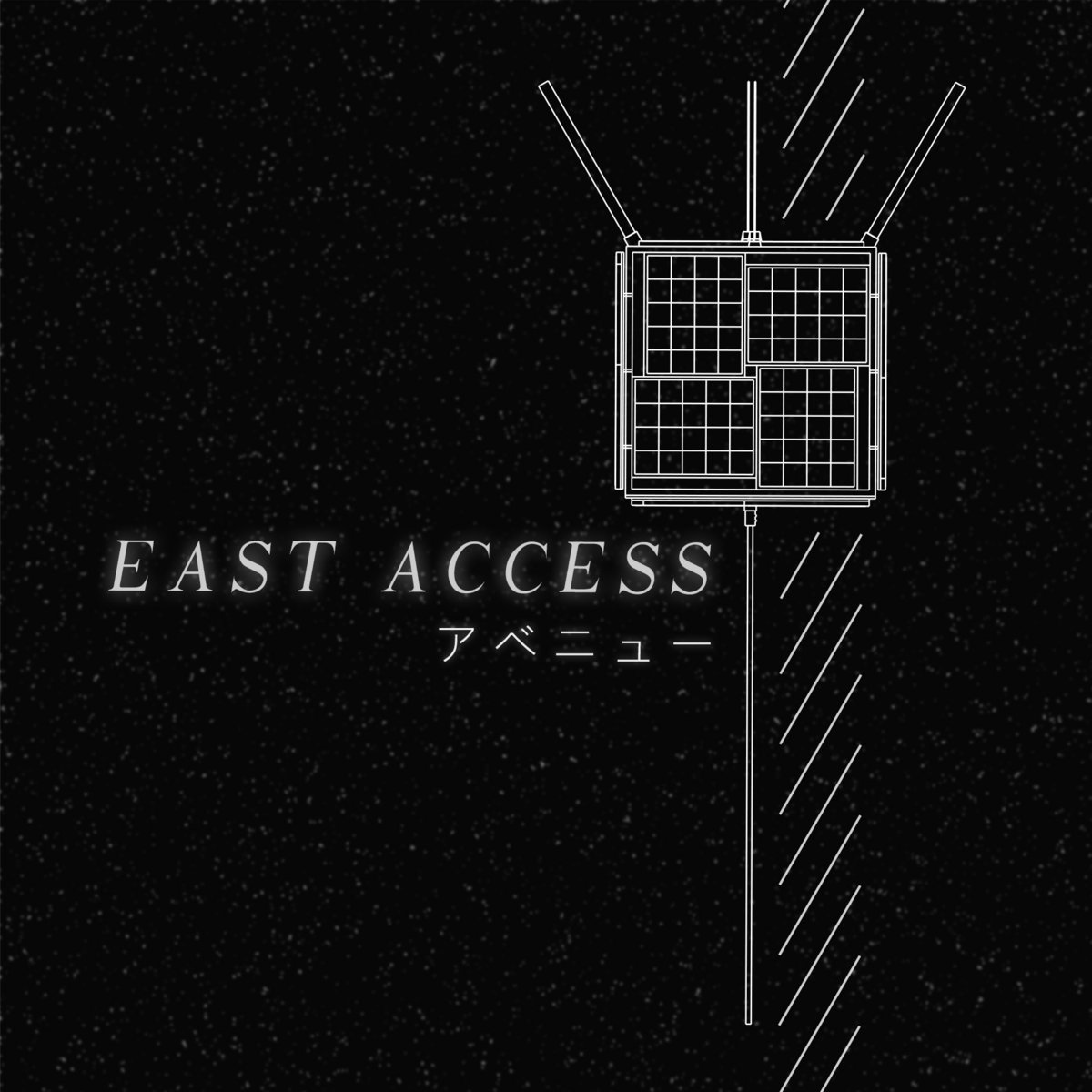
My only Argentina-focused album was L.U.SAT-1 BEACON. It was a fun opportunity to talk about the first time Argentina got a satellite into space, using some Argentine samples. The album follows the launch of L.U.SAT-1 and its actual story, from the desire to launch it, to its successful mission orbiting Earth. The end drifts into fiction though. The real satellite is still kicking around after 36 years, and it wakes up when the sun hits its solar panels.
Even as an Argentine project, only 6 of the 14 samples are from here. It might sound like it’s not enough, but I feel the samples are well used: Dmitri Shostakovich might have been Soviet, but his music captured the feeling of a satellite drifting through space in a very special way. It also offers contrast, as before him, the Argentine composer Atahualpa Yupanqui manages the same feeling with a very different instrumentation. I think the samples had to mean something to me first, but it also had to resonate with Argentine culture. So there are references of very well-known moments. I layered the transmission of Maradona’s hand goal as the song “Past Visioneer’s Avenue” reaches its climax, and Argentine celebrations blast into the void of space as the satellite arrives at its destination.
P: Have you worked with other Argentinian musicians or artists, either locally or nationally? How about people in other countries in South or Central America?
E: Yes! The signalwave discord server is such a cool place to meet people! I’ve never been part of the collabing culture of the server before, because I know my times in this hobby are very inconsistent, and I risk running against other people’s time. But I love that it exists and keeps everyone on high energy.
That changed in 2025, when LAPA, Nahuelsat and Ishiiburidai arrived to the server. Rapidly we noticed each other and, having the advantage of speaking the same language, started talking about a common project. That is Argentum Quorum: even if we individually couldn’t participate in comps because of time strains, we can collab to make tracks for compilations and keep ourselves in the loop and engaged. Also, it is a project to try experimental stuff in a “controlled environment” where we can spam samples, corrections, share resources and offer tech support. We are also working on albums specifically for AQ! We might jokingly say we are becoming a Boy band, but I primarily see this as a new friend group I truly enjoy being part of.
I haven’t collaborated with people outside the country, but I’d like to in the future!
P: Do you think you are able to connect easily with the American or European vaporwave scenes despite the geographical distance?
E: Yes! I believe we as humans have the ability to feel moved by art no matter where it is from. I haven’t felt “more connected” to a project because it is south American or Argentine, but it has the same ability to captivate me as any other project. I acknowledge that I might ignore the real artistic intentions behind a project when I don’t understand the language or the culture, but I can’t help feeling as moved when see the hand paintings in the “Cueva de las Manos” In Argentina as I do when listening to “Ergen Deda” by a Bulgarian Choir. And I don’t understand the language or intentions in either of cases.
P: What is one thing you would like to see happen with vaporwave in Argentina or vaporwave in general? How do you think the vaporwave scene in Argentina could grow?
E: I think the Argentine vaporwave community has the unique ability to explore hidden gems that only us, as Argentines, might be able to find, as we might have a deeper knowledge of our country’s story. I already use this way of making albums, although involuntarily: Even if the album has nothing to do with Argentina, I’d use some samples that fit the concept as a way of sharing the variety of music made here. Sometimes it is the kind of music that doesn’t reach the vaporwave community outside the country.
I think it is a pleasant surprise to listen to local projects from other countries, sharing obscure music you would have never been able to listen to if it weren’t for these artist’s desire to share their culture. Nevertheless, I’m absolutely ok if an Argentine doesn’t want to do it, because I know how limiting it can be. Lots of vaporwave subgenres are made around samples from very specific places and trends that we didn’t experience as a country.
As for the growth of the scene, I see a very good number of Argentines getting into it. Just in the last year, three new Argentines popped into the signalwave scene and are making brilliant stuff nonstop, collaborating left and right with people all over the world. Searching on Bandcamp, I see a healthy number of active projects. I think the scene is alive and well, but I think “support groups” like the signalwave server are THE places to find support, critique, and resources for new people to start their projects, but also for them to have continuity.
You can find EAST ACCESS's music on Bandcamp and YouTube and with Argentum Quorum on Bandcamp.
Return to the main hub or read about the next artist.