Argentinian Vaporwave Producers
** There will be a Spanish language version of all of these interviews soon, stay posted! **
One thing that I find particularly amazing about vaporwave in the mid-2020s is that it has become a very global movement. The increasing ubiquity of the internet in all corners of the world paired with browser and smartphone-based DAWs and easy access to samples of basically anything, opening up the field to anyone with a sense of nostalgia and love of reverb. And as untouched City Pop samples become as rare as new oil fields, I've found that vaporwave producers outside the United States are particularly well-positioned to tap into their own musical backgrounds in the effort to explore new sounds.
At the end of 2025 I was brought into the Channel 0 signalwave compilation and came to know a quartet of Argentinian vaporwave musicians who had released some music together as Argentum Quorum. Listening to their music, tapped directly from the culture and spirit of Argentina, I was struck by a real curiosity about a country that I didn't know a lot about and I wanted to go deeper. Albums like Argentina by Nahuelsat and LAPA sparked questions and conversations with the musicians as they shared more with me about their home. Which then got me wondering, who else was out there from Argentina and what did they think?
So, in order to better answer that question, I have created a new kind of interview format for the Pool/House. A sort of round table approach pulling in a larger number of people to give their own takes on being an Argentinian in vaporwave. And to better highlight their actual music, for the first time I have also partnered with the excellent B O R T media to make a music mix of the musicians featured here (plus a couple more). I'm really excited to have pulled this together and it's a format I intend to use again in the future to highlight different groups of musicians in the vaporwave community.
As for these interviews, my main takeaway is that the Argentinian vaporwave community is just like the larger vaporwave community in its diversity! People have differing opinions on how much their music should reflect larger themes or societal messages, if at all. Some of them love to tap into Argentinian samples, others mostly avoid it. The existence of vaporwave as an online community means that Argentinian musicians can connect with other people around the world easily even when it's not as easy to find each other in IRL spaces. Hopefully, these interviews can help foster some new connections with vaporwave listeners in Argentina and around the world!
From B O R T media:
Getting the chance to collaborate with Pool Plants really shook things up for me. It’s easy to get stuck in a loop with the same familiar sounds, and this project challenged me to look beyond the usual 80s American pop tropes. While vaporwave is a genre without borders, it’s never without the cultural flair of its makers. Diving into the minds of these Argentinian creators revealed a unique Latin perspective, from LAPA’s transit-inspired 'metro' stories to Nahuelsat’s incredible pairing of samples with classic Argentine rock. It’s an authentic brand of nostalgia that weaves together influences like Tango and electro-folklore into something that feels both futuristic and deeply rooted in the country's own history.
Visually and sonically, I hope this serves as a 'visual vacation' that captures the spirit of yesterday’s Argentine pop culture. It’s a small, tight-knit vaporwave community over there, but the talent is undeniable. Some tracks lean heavily into the regional experience while others are just really fucking good internet music. My hope is that this mixtape and the Pool/House article help rally this community together. To the artists in Argentina: keep sharing your stories and inspiring others to join the conversation. There is a unique voice here, and it deserves to be heard.
Shout out to C-60, computers for sale, and Unnamed 禁名の者. They didn't make this mixtape, but I dig their music.
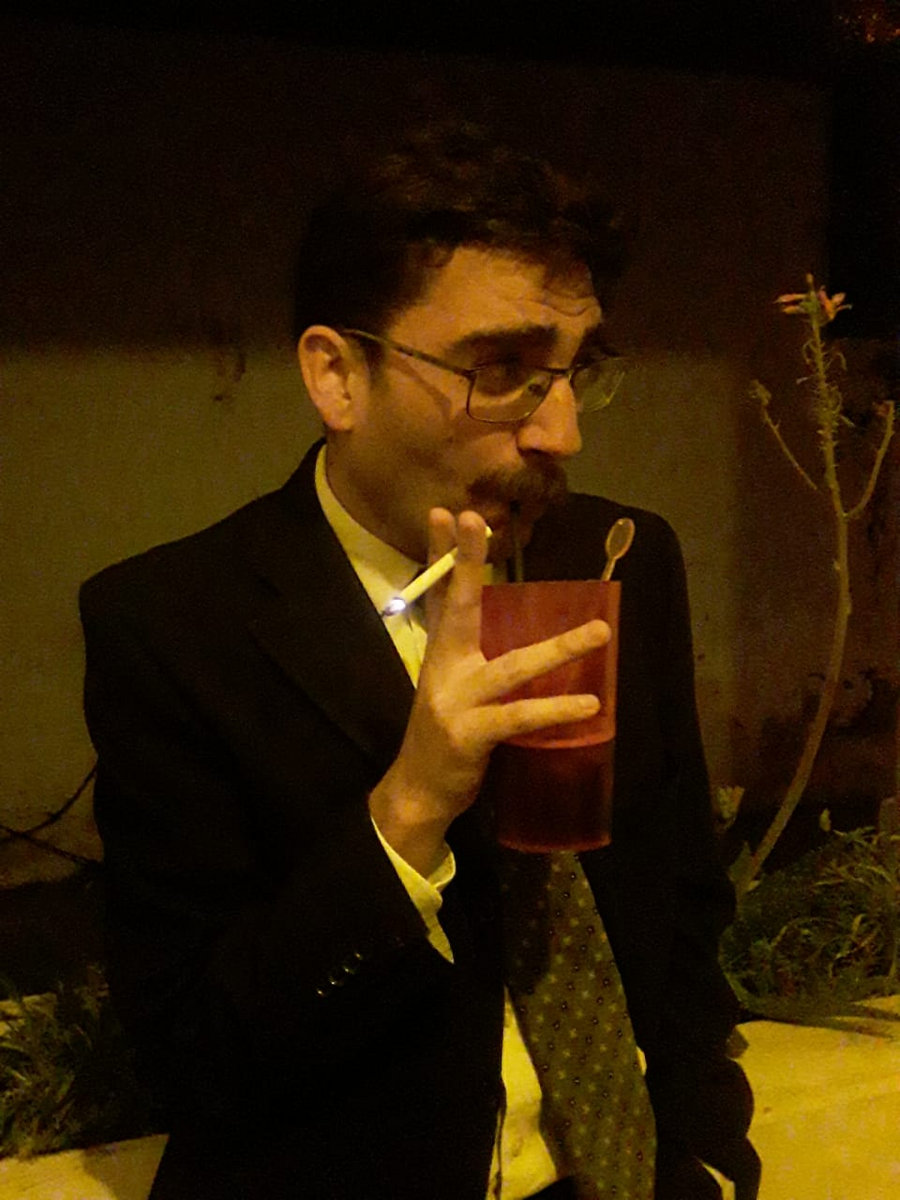 |
Dario Matta
"Conceptually, vaporwave itself is a strange mixture between American pop culture, Japanese technology, ‘80s nostalgia, ‘90s nostalgia, old software and hyper-capitalist utopias/dystopias. I find it really interesting to add the “local flavour” of Argentine music, voices and references." |
 |
EAST ACCESS
"I first started entertaining the idea of making my own take on vaporwave around 2021. I wanted an extended version of “Eoa” by Vinter in Vegas for my own listening, so I created it in Audacity. I ended up discovering paulstretch, reverb and other effects there while experimenting, and started creating new tracks." |
 |
endlessdream
"When I was a kid, I remember Vaporwave being a pretty big thing during mid-2010s. The aesthetic was all over the internet but I was too young to understand it at the time. It was not until 2024 when I first listened to a Vaporwave album, and started digging in the rabbit hole, becoming more and more fascinated with the genre the more I listened." |
 |
ishiiburidai
"I try to branch out as much as possible when making my music, going so far as to name my tracks in Japanese, Bhutanese and Nepali. A recent EP I made has the concept of using one Eastern language for every track, which compliments that the songs in it were used for various compilations and the cover reflects that (the butterflies coming from all directions and meeting in the middle.)" |
 |
LAPA
"I listened to a lot of future funk mixes on YouTube at my job, but then some situations there changed and workplace became a lonely and boring one. The job suddenly got better but not exactly my feelings of loneliness and strangeness, so future funk wasn’t enough. Mallsoft entered the chat, and that was a BIG change for me." |
 |
Nahuelsat
"My personal history with Argentine music starts directly with my parents. They always listened to classics that are still considered classics today (like Soda Stereo, Sui Generis, Los Abuelos de la Nada, Virus, Miguel Mateos, Charly García, Fito Páez, Andrés Calamaro, Patricio Rey y sus Redonditos de Ricota) but also other Latin American artists (like Maná, Ricky Martin, and so on)." |
 |
Trademarks & Copyrights
"If I had to name one record that truly made me realize I wanted to devote my life to music, it would be Computer World by Kraftwerk. Hearing that album for the first time when I was eight years old completely changed me. That was the moment when I thought: I want to be a musician." |
 |
Zai Kowen
"I started making music in 2013. I began making dubstep, influenced by Skrillex's work, through whom I discovered more artists in the subgenre. I composed all of this under another nickname, "Manustep." Then I left the project in 2016, and later I discovered the nostalgic aesthetic of Vaporwave and Future Funk, which caught my attention." |
Shaskee
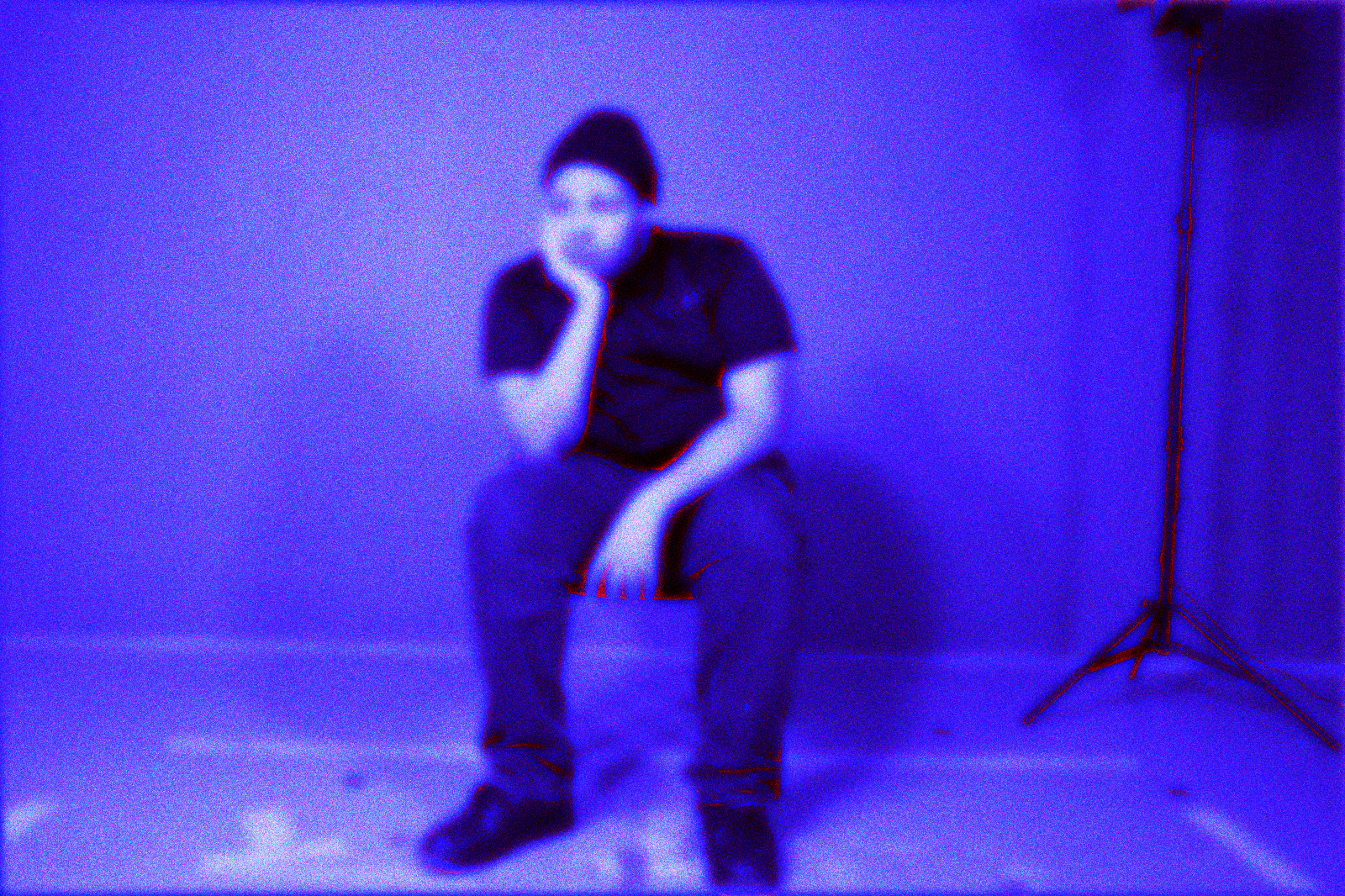
I talked to Shaskee, a vaporwave producer and the head of label/collective Zero Based Collective. Shaskee produces music in many subgenres under many aliases and with many collaborators both in and out of ZBC, with his most recent release make.sum.happen. coming out in March. In this interview he educates me on the tapemusic subgenre, offers his perspective on running a label and forming a collective, and gives a collection of shoutouts along the way to friends and collaborators across the music scene.
Pool Plants: How did you get your start making music and how did you get your start in the vaporwave scene?
Shaskee: I’ll go with the vaporwave scene first. I originally started checking out or listening to vaporwave when I was younger back in 2014, 2015. That was because stuff like Lisa Frank 420 and a lot of other classic vaporwave songs were getting popular at the time. But it wasn’t until later on, in 2021 or 2022, when I decided to get back into vaporwave because this was when I was getting into music a passion. This was when I first listened to Death’s Dynamic Shroud’s I’ll Try Living Like This. That quickly became one of my favorite vaporwave albums, if not, favorite albums period. Just the experimentation alone, I don’t think at the time I had heard this type of sampling before. It was beautiful, it was depressing but it was also colorful and very fun.
I think around the same time, if not a bit later, was when I started making music, specifically on Bandlab. Bandlab has its limitations but around this time I was just making shitty experimental noise and ambient stuff. It wasn’t too deep but I thought it would be cool to make it because it was less technical and easier for me to make, just experimenting overall. I thought it was cool for the time being and I still think making stuff like that nowadays would be cool. But obviously I’ve changed to something that’s a lot more focused or more technical, if that’s what people would like to call it.
P: What do you mean by more technical?
S: Less free-flowing and more structured, if that’s the word I’m looking for. More structured and less improv-ish stuff going on.
P: You’ve made music in a lot of different genres and vaporwave subgenres. What would you say is your favorite to work in?
S: My favorite, I’ve never thought of that really… I feel like tapemusic, not tape music as in just tape loops or anything but “tapemusic” the instrumental hip-hop subgenre. This has been a very recent one but also something I’ve loved diving into both as a producer and as a listener. The off-the-grid drum patterns and the overall lo-fi sound that a lot of producers in the scene tend to grab onto with the sound design, stuff like that. Even though it’s a very recent thing that I’ve latched onto, I fuck with this sound so heavily. I’ve had the chance to talk to a lot of other people in the scene and they would give their opinions on my sound. But I try my best to go for a unique sound while also aiming for something similar to a lot of other people’s sounds in the scene, if that makes sense. Trying to replicate their sounds but still make it more unique to me.
WVSQD
For my first interview so big it became a two-parter, I connected with the powerhouse video collective WVSQD. WVSQD is [carteBlanche], crispy_doodles, Dub Prophet, and Solodolo84. This formidable quartet of visual producers has been an important part of the vaporwave scene for the past few years not just for their video work but also their organizing and connecting within the larger scene. In part one I managed to get Carte, Crispy, and Solo together to document the fabled origins of WVSQD. Along the way we talk YouTube culture, the importance of visual media in vaporwave, the legend of L I N D A, and the power of coincidence. Read to the end to see why we stopped part one where we did and stay tuned for a part two later this year!
Pool Plants: You’re a mysterious bunch in a lot of ways so today we’re going to lift some of the fog, or possibly create some extra fog depending on where we end up. But to start I want to get to know you individually a bit. So, as individuals, how did you get your start in vaporwave and how did you get your start in the video production scene. Did those two things correspond with each other or not?
[carteBlanche]: I started making videos before the pandemic for 猫 シ Corp. I just made two videos and posted them and sent them to him. I didn’t think much of it but he got back to me and told me about them and they were interesting, not your normal typical videos. It wasn’t your traditional vaporwave video because I was new, I didn’t know. So, little things like that got me going back in the day and that’s what got me started making videos. The vaporwave scene though, we’ll get into that a little later but it involves Crispy, Dub and Solo and all of them. I wouldn’t be a part of anything vaporwave without them so after their story, you’ll understand that part of it.
crispy_doodles: I had a YouTube channel pretty much as soon as YouTube started. I didn’t even have the internet at home, I would just go to school and watch videos. I started uploading my own videos way back in 2010. I have some really old videos from my study abroad trip to Japan. Then it evolved into mostly shitpost videos. I always wanted to make a YouTube Poop but I never did. My channel pretty much stopped for five years in 2015 and then the pandemic bought me back and I started doing Let’s Plays. I was learning how to use video editing software and I always wanted to do Twitch streaming. So, I would stream on Twitch and record it through OBS and learn to edit it. That evolved, and around that same time I discovered the Krelez Vaporfunk channel. That’s sort of when my channel pivoted to both a Let’s Play channel and a vaporwave channel.
But let me back up. Vaporwave itself I discovered during the aesthetic meme phase on the internet. I guess that’s mid-2010s, 2015 or so. Obviously the very first one I heard was Lisa Frank 420 and Luxury Elite followed not far behind. Then YouTube started recommending me mixes, all the old mixes that everyone knows and loves that you can’t find anymore. After I started doing Let’s Plays and uploading more videos, about a year later I started doing vaporwave mixes. So that’s where the video editing and the vaporwave converge. And then it further converges with music videos after I meet Carte, Solo, and Dub. My channel is a little bit of everything but I certainly love all aspects of it.
Solodolo84: I’ve always been a fan of vaporwave since 2011 or 2012. Hearing Lisa Frank and stuff like that for the first time, I knew there was something there because it gave me the feeling of listening to DJ Screw. You know I was a Screw-head when I was in middle school and high school. So that slowed and throwed, that chopped sound was always there. So when I came across vaporwave it’s like, this is the next step of it. I just took to it, I’ve always been a fan of it. As far as video production I had no experience. I grabbed some songs that I liked, I had a couple of visions and ideas. My first time sitting down at Vegas, I made ten videos. I put them up on YouTube, I had a YouTube channel since 2008. Doing those first ten I enjoyed it, I enjoyed getting my ideas out so I could make room for new ideas. I caught the editing bug and I’ve been at it ever since 2022.
HYDROPLANED INTO A FALSE REALITY! and Liam Smizdik
Welcome to a very free-wheeling interview with HYDROPLANED INTO A FALSE REALITY! and Liam Smizdik. Hydroplaned (aka HIAFR, Ian, and many others) runs World End Collapse, Liam (aka world of mystery and others) co-runs Zero Based Collective, and together they just released the excellent new album the blast, their latest release as ceramic planetarium. We talk about so many things, including internet communities, Coin locker kid, reusing album art, running labels, and more. There's even a couple of true lore drops by HIAFR along the way!
Pool Plants: Thank you for joining!
HYDROPLANED INTO A FALSE REALITY!: I’ve never done something like this before.
Liam Smizdik: Me neither. I did an interview one time but it never got released because it was kind of low quality. We both think that, both parties.
H: Was it on Sammy’s thing?
L: Yeah.
P: You mean the audio was not good quality?
L: It was an interview by a friend of mine. The thing is though he hasn’t listened to that much of my music so… He just kind of didn’t have that many questions.
P: Ok, so how did you first get introduced to vaporwave?
H: I got introduced to vaporwave through Pad Chennington’s videos, weirdly enough.
P: It’s not that weird.
H: It’s kind of weird. I started producing vaporwave before I got into the scene. I think my first vaporwave album is from JESUS CHRIST RAIN HEAVEN, an album I made one of the first times I’ve made a thing with FL Studio.
P: Was this after the Pad Chennington videos? Or even before that?
H: I saw his videos and I thought that was a really interesting idea to upload videos to Bandcamp with no connection to what I’d done previously. I was like, “This is cool, I like being able to have this cool anonymous thing.” And now I’m not very anonymous with everything but it was this cool idea that first brought me into it.
P: What were you doing before?
H: Weirdly enough, I have an analog horror series! I was really into that community.
L: Fun fact, that’s how we both met!
H: If anyone wants to watch it feel free to reach out, but it’s delisted and it’s not super public. It’s a thing that exists. I have some issues with how I did some stuff but that’s a different conversation.
L: For me that’s kind of a broad question. Ever since I was a kid I’ve known, not so much the music side of vaporwave, but the aesthetic. Specifically, the aesthetic part was pretty big back in 2016, 2017. I was 9 years old and that’s when I found out about it. As for the music aspect of it, I got into it more like how Ian did with Pad Chennington’s videos. I also was producing vaporwave when I wasn’t even in the scene. I was just fucking around with my friend Gabe. Shoutout to him, we made two albums under the name Radio Pirates. Both were repressed on World End Collapse a couple years ago.
H: I’m going to casually say shoutout to Shaving Cream Records.
L: I forgot! That’s what we released music under. It’s been rebranded to Planetville Sound.
P: When did you guys meet?
H: During 2024. No, way before that.
L: It was back in early 2023.
H: Yeah. I was really into RYM and that whole scene. I was a very pretentious music nerd at that point. I think Liam followed me from having a presence in the analog horror scene. I’m still friends with folks in that scene. I posted something on my Instagram story that said, “Hey, send me songs to check out and I’ll tell you my thoughts on it,” and he sent me a song from Coin locker kid, which is now one of my favorite artists ever. We just talked about it and started talking, we became friends. Then we realized he made vaporwave and I made vaporwave.
V@PYD / Golden Ground
I was very pleased to sit down with V@PYD, across many miles and time zones, to talk about his long vaporwave career and his parallel project Golden Ground. In a very conversational interview we discussed almost 10 years and more than 50 albums in the vaporwave scene, his musical upbringing in Germany, and how he balances the pull between vaporwave and his original love of electronic dance.
Pool Plants: Ok V@PYD, welcome to the Pool House!
V@PYD: Yeah thanks! By the way, it’s pronounced “VAH-pid,” not “VAY-pid!” That’s something that follows me since I picked that name. Because of the symbol and the y, it’s difficult. Maybe my fault, I don’t know.
P: Yeah, you know in English people would pronounce that word both ways! For some reason I tend to go more for the "ay” sounds, so that’s my bad.
V: It’s no problem, it happens a lot.
P: You don’t have the actual word vapid in German right?
V: No we don’t have it, it’s just an English word that I associate with vapor through word association. I thought vapid is kind of the same meaning, it’s related some way.
P: So that is your fault then, because if you want to be like vapor… *laughs*
V: Yeah, Vaperror was already taken!
P: Did you know that word in English before you chose it?
V: Yes I did. I watch all my cartoons and entertainment in English when I can because the German dubs are mostly terrible. Especially for the old MTV stuff, Beavis and Butthead or Daria. I think it’s from Daria that I know the word.
P: That makes so much sense! I was a big Daria fan growing up. And now we have Dariacore!
V: They never made that reboot, there were talks about her college years being animated.
P: Maybe that’s ok.
V: You don’t need to reboot everything now.
P: Let’s get back to the music. You hit your 50th release milestone last year, and I was trying to look into if this was actually your 10-year anniversary of making music. I saw some albums released in 2017 on Bandcamp, so when did you make your first album? What was your introduction to vaporwave?
Ureterocele
For my first text-only interview, I connected with Ureterocele, a solo bass wizard and a truly delightful Bluesky poster. He just released his second album Tube With Contrast Medium and I wanted to learn more. We talked about playing in bands vs playing solo, connecting with fans, and drawing inspiration from all sources in life.
Pool Plants: When did you first start playing bass and what is your history of playing bass solo and in groups?
Ureterocele: I started playing bass when I was twelve years old. When I was fifteen, I played at a live venue with the first band I ever formed in my life. Until around the age of twenty-two, I kept playing music in bands, changing forms along the way, but always as part of a group. After that, my bass career was on hold for a long time. I only started playing again in 2024, when I began Ureterocele.
P: What type of music did you play in those first bands?
U: I consistently played alternative rock. In the early days, I was in a three-piece band that was kind of like a mix of NOFX, Rage Against The Machine, Red Hot Chili Peppers and Korn. We did both recordings and live shows with that band. The band I played in up until just before COVID was also alternative, but in that group I played guitar. In both bands I was also doing vocals. However, since I started Ureterocele, I have not really talked about those past bands.
P: Who are your favorite bass players and who had the biggest influence on your style of playing bass?
U: My favorite bass players and the people who influenced my bass style are basically the same, and there are many of them. To name just a few: Les Claypool, Jaco Pastorius, Victor Wooten, Flea and Billy Sheehan. I have never been completely devoted to one particular person, but I have been influenced by every bassist I have listened to.
.mp3Neptune
I interviewed .mp3Neptune, long time artist and traveler in the vaporwave community and the head of slowinternet netlabel. We talked about early days on Tumblr, aliases galore, the line between personal project and label, and Boards of Canada.
Pool Plants: I want to start talking about you and your musical journey. How did you get your start in the vaporwave scene and were you making music before that?
.mp3Neptune: I was making music before that, I actually started making music in 2011. I remember the very first thing I ever made was this really, really terrible dubstep remix of the Tetris theme song. I was making a lot of dubstep and EDM-type stuff. I was really into that; I still am to this day. That was exclusively what I was making, but then something happened and I started listening to Boards of Canada.
P: Longtime favorite!
M: I got super into them and that was kind of my gateway into the more… not laid back necessarily, but more “experimental” genres of electronic music.
P: What was it that brought you to them at that time?
M: I think I was just always interested in electronic music. I got super into Music Has the Right to Children. To this day, that’s one of my favorite albums. I don’t know, I don’t even remember where I discovered them. It might have been on Tumblr, which will come back up in this interview. I got really into that album and after that point it was all over, I was hooked.
P: So you’re getting into them and then what leads you to vaporwave?
M: I guess in a way it’s a very natural progression. Boards of Canada has this sound that’s very fuzzed out, very retro 70s vibes, VHS tapes, stuff like that. Naturally I was already kind of attracted to those sounds. It was on Tumblr that I really first started getting into vaporwave. I have this blog called Planet Online. Back in my day it was what was referred to as a “glow blog.” Imagery of cyberpunk, electronics, 3d renders of undulating spheres, stuff like that. I was already in the netart sphere. I was making a little bit of visual art and posting it and it ended up getting picked up by a lot of people that were fans of vaporwave at the time. A lot of those people I don’t even think are on the internet anymore, but at the time it was a very insular vaporwave community just on Tumblr.
I remember getting into Blank Banshee and Infinity Frequencies, Infinity Frequencies especially. It was through audio posts that people had uploaded onto Tumblr, I wasn’t even looking at Bandcamp pages at the time. I did end up doing that later but originally I was just listening to individual tracks like, “Wow, that’s super weird and interesting!” Eventually there was a lot of drama on Tumblr and people ended up jumping ship from there to Twitter. Vaporwave twitter obviously was a huge community, a massive amount of people there.
Nightleek タマネギ
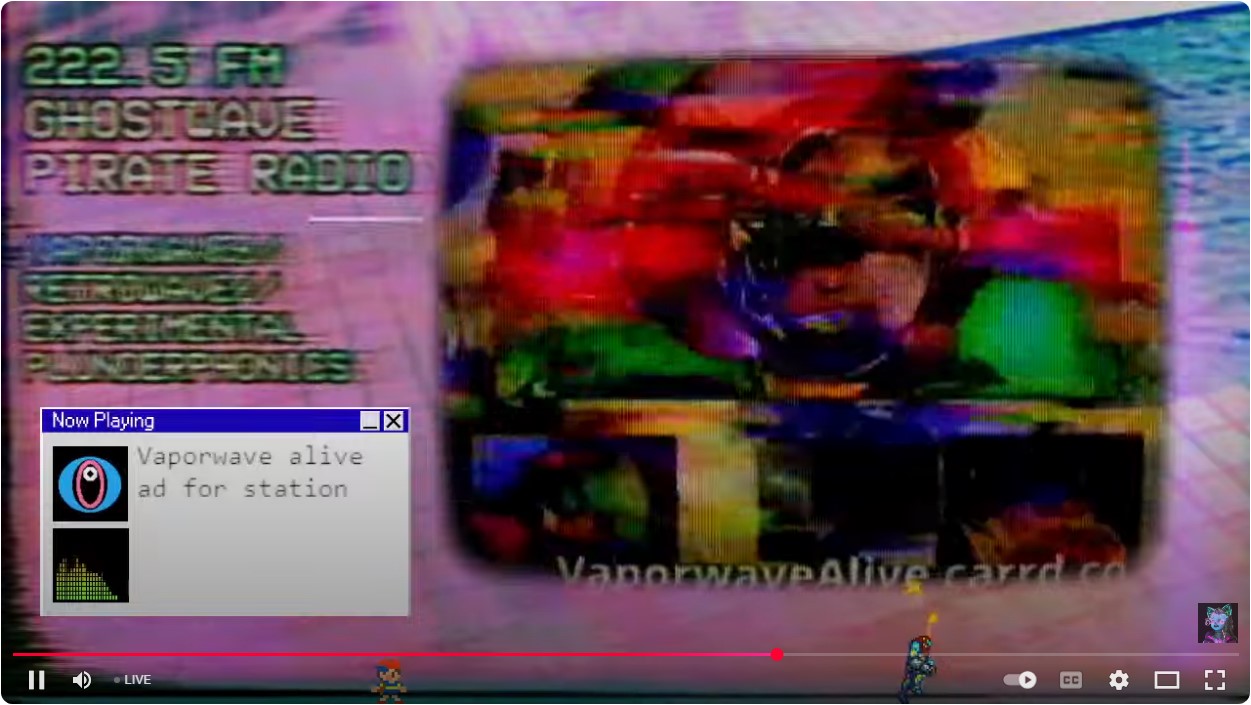
I interviewed Nightleek タマネギ, one of the co-founders of Children of Vapor and the operator of 222.5 FM Ghostwave Pirate Radio, a streaming vaporwave radio station on YouTube. We talk about her background in radio, the evolution of the radio station, letting politics inform your music, and finding inspiration in Luxury Elite and library music.
Pool Plants: When did you first get the idea for the station? Did you start as a streamer and then start thinking about the station?
Nightleek タマネギ: Ok, so that is kind of a complicated question. I grew up with broadcasting, I grew up listening to radio shows, I grew up recording the radio. My dad was in the Navy and working at a radio station and recording radio stations for me. When we first moved back to the US in 1992 I was 7 years old. I remember one of the best presents I ever got as a very small child was a portable radio, one of those little ones that’s the size of half of a brick. It’s got one speaker in it and an antenna, you can plug it in or it runs on batteries. I remember getting back to the United States and just turning it on and trying to find music and being so excited to have discovered, for the first time, country music. Because we had lived in Scotland and they didn’t have country music stations, I just listened to whatever I could find. So I was like, “Ooh wow American music!” *laughs*
My parents ended up getting divorced and my dad moved around a lot. While he was a firefighter in the Navy he was a radio guy on the side. He ran a fake radio station for the ship he was on at one point. By fake, I mean it didn’t broadcast anywhere but inside the skin of the ship. The ship has an internal intercom system and he ran the radio show on there. When I joined the Navy, I wanted to join in public affairs. I wanted to do journalism because that is heavily related to radio. But they didn’t have any openings so I joined as an IT. In the ‘90s they had merged radiomen and data processor into the same job, “IT,” because in the ‘90s it made sense. “Radios and computers, these are all the same thing!” The problem was that radio waves were moving at a 20-degree angle, as far as progress goes, and computers were moving at an 80-degree angle. When they decided to merge them those two lines had intersected and they were like, “These are the same thing.” Then they immediately went in two different directions again.
So, as an IT I focused on radio. I worked with UHF, VHF, satellite. I did internet stuff but it was all in terms of satellite radiation. We made a fake radio station on our ship, too, where I plugged an mp3 player into a spectrum analyzer, plugged the spectrum analyzer into an audio patch panel, then plugged the patch into a headphone jack somewhere. Then we called somebody on the bridge and said, “Hey man, you got a free speaker? You should turn to channel 3, just trust us,” and they’re like, “Thank you so much, God bless you.” *laughs* We played music like a pirate radio station in the sense that we weren’t supposed to be using that equipment in that way, not that we pirated the signal.
But it’s very much been in my blood. When I was a child I took apart my walkie talkies and wanted to see how they worked. I wanted to go to Radio Shack and get the necessary equipment to hijack the local classic rock station that I knew everybody in my neighborhood listened to and play something else on it instead, just for the neighborhood. I never managed to get that stuff because I didn’t have money as a child. But that was one of my ambitions, to hijack a radio signal.
P: I’m surprised you didn’t become a phreaker!
N: I wanted to! I’ve always been hacker adjacent, but my lifepath didn’t go that way.
ASHLEY GOLD
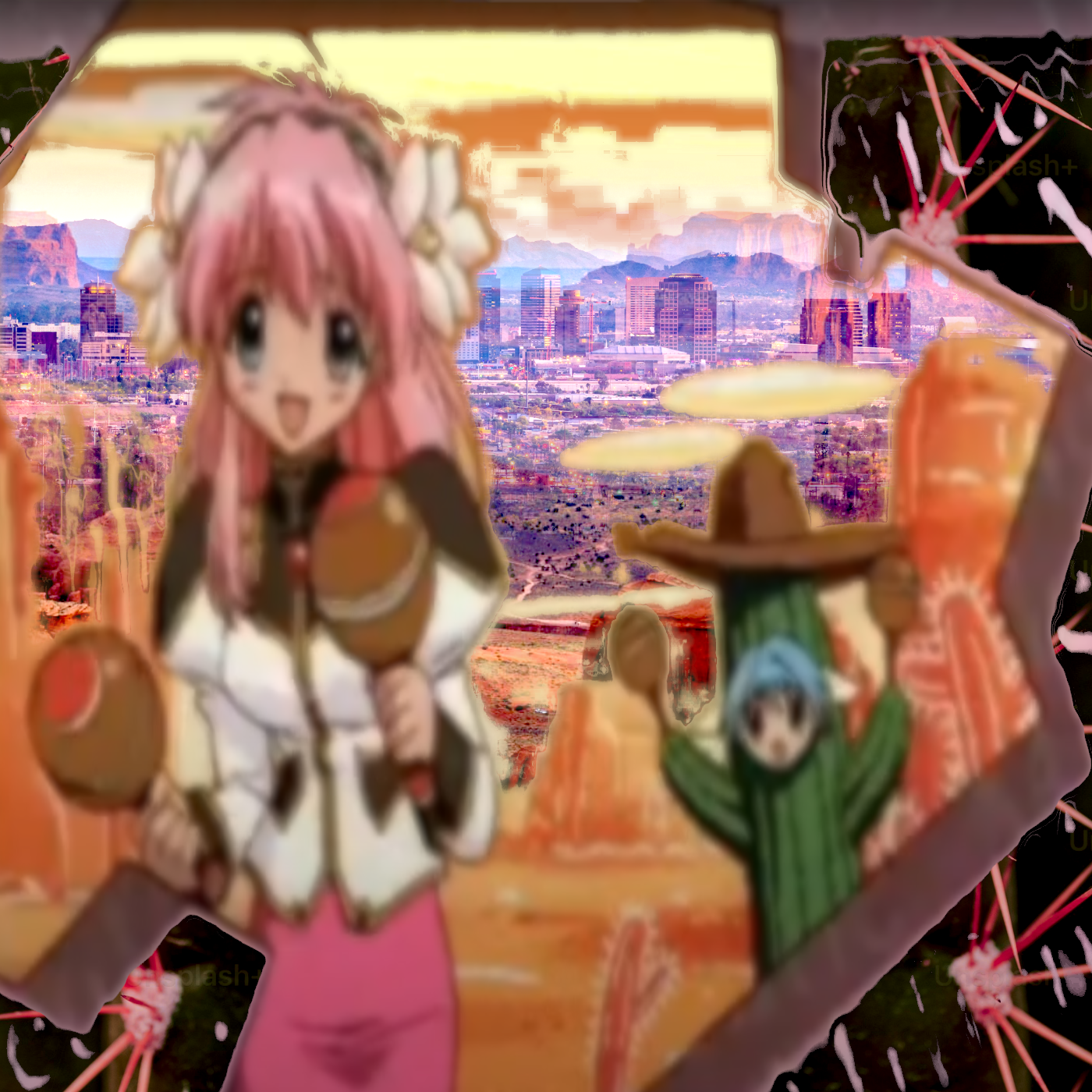
I sat down with Ashley Gold, the new superduo of Mary K Ashley and Gold Blu-27, to discuss their album phoenix loud/ツーソンへのナイトドライブ from mid July. I learned more about their origins as vaporwave artists, how they connected and came up with this album, and the iconic drive from Phoenix to Tucson. We connected over our shared love for Oneohtrix Point Never, DJ Sabrina the Teenage DJ, and regional meme lawyers.
Pool Plants: How did you get your starts in vaporwave as fans and as artists?
Gold Blu-27: I think it was way back in September of 2024. I was really deep into electronic music like Aphex Twin. Mostly just listening to a lot of Aphex Twin. And I listened to a lot of my music on Spotify. Usually most of the time Spotify gives album picks and I like to listen to those. One day one of the album picks was I’ll Try Living Like This by Death’s Dynamic Shroud. I didn’t know at the time what vaporwave was, I just saw the really interesting cover and pressed play and was like, “Woah what the fuck is this shit? This shit sounds funky! In a good way. Like the cool electronic Aphex Twin way.” And then I just put it inside.
Two weeks later, I guess, you know this video of Nickster who covers the samples of Eccojams Vol 1? What the hell is Eccojams Vol 1? I just start getting more into what the hell vaporwave was and it’s like, “woah this shit is amazing, I could get into this.” And so I think at first I tried working on Sonus because I didn’t feel like FL Studio at the time. I was trying to follow this guy on YouTube who did a recreation of A3 from Eccojams.
After that the first project was called Hands Across America, based on the charity event where people put their hands together from New York all the way to California. And then I just got into that particular era. What if I make music like that? And that’s how Sunny Blu 27 was born. Back then I wasn’t really the kind of person that put dedication into my own projects. So it took about a month or two with the project but most of the production time was in December 2024. After that when January came I published the album and started on my whole vaporwave journey becoming an artist.
Ashley: So when I was in middle school that was when everything was blowing up in terms of the initial vaporwave scene. So I was very familiar with the aesthetics but not really the music. In terms of music, I was mostly a fan of things like the Hotline Miami soundtrack which was of course synthwave, and because of that my main avenue into vaporwave was through plunderphonics. Things like the Avalanches, any kind of sampled music, like Burial, Gorillaz, stuff like that. It’s all that stuff I’d always loved so much.
What got me into making it was my friend was a collector of vaporwave vinyl and cassettes and she got me back into it in 2023 after a long time of just ignoring it for punk rock in the middle. I think what appealed to me most was the punk rock aspect of stealing samples and making them your own. I think that was the most appealing thing as an artist. But as a fan it’s been connecting with other artists that are just incredible and you would’ve never thought you’d be able to talk to them. It’s very interesting As far as my favorite, favorite vaporwave thing of all time. I don’t know if it’s straight up vaporwave, but Replica by Oneohtrix Point Never would be my desert island pick. It’s just perfect. So for me as a fan, maybe one day I’ll have my own Replica.